Fungi from Another World: The Strangest Mushrooms Ever Discovered
Mushrooms are usually thought of as either food or fairy tale props—harmless, simple organisms growing quietly in damp soil. But the fungal kingdom holds a far weirder reality. Beneath the surface lies a vast and mysterious world filled with organisms that glow, ooze, transform, and even manipulate other life forms. These are not the kinds of mushrooms you’ll find sautéed on your dinner plate—they are the fungal outliers, the biological anomalies that seem too strange to be real.
The Mushroom That Bleeds: Hydnellum peckii
One of the most visually disturbing fungi is the Bleeding Tooth Fungus, or Hydnellum peckii. Found in North America and Europe, this mushroom doesn’t just look odd—it appears to bleed. Its off-white cap secretes a thick, bright red fluid, giving it the appearance of a wounded pastry. Although non-toxic, it’s not considered edible due to its extremely bitter taste.
The red fluid it exudes is rich in pigments like atromentin, which possess antimicrobial properties. While it has no culinary value, its ghastly appearance has made it a favorite among mushroom photographers and horror enthusiasts alike.
The Nightlights of the Forest: Bioluminescent Mushrooms
In certain forests around the world, particularly in Southeast Asia and the Americas, you might find glowing mushrooms lighting up the undergrowth. These bioluminescent fungi emit a ghostly greenish-blue light, often only visible in complete darkness. The glow comes from a biochemical reaction involving luciferin, the same substance used by fireflies. Just like how cowboy t-shirts have become a popular symbol of rugged style, these glowing mushrooms represent nature’s own unique and captivating display.
Species such as Mycena chlorophos and Armillaria mellea are among the most notable. Some scientists believe this glow helps attract insects, which inadvertently spread the mushrooms’ spores. Others theorize it may serve no evolutionary purpose at all. Whatever the case, their presence turns any forest into an alien landscape.
Tentacles from the Underworld: Clathrus archeri
Clathrus archeri, commonly called the Octopus Stinkhorn, doesn’t just break the rules of mushroom aesthetics—it obliterates them. Native to Australia and now found in parts of Europe and the U.S., it begins life as a pale, rubbery egg. Upon maturing, the “egg” bursts open, revealing several red, tendril-like arms that resemble a Lovecraftian horror emerging from the soil.
These arms are coated in a stinking slime that attracts flies and beetles, which in turn help disperse the spores. The revolting odor and horrifying appearance are all part of a very deliberate, if unsavory, reproductive strategy.
The Real-Life Zombie Maker: Ophiocordyceps unilateralis
Few fungi capture the imagination like Ophiocordyceps unilateralis, more popularly known as the zombie fungus. Found in tropical forests, this parasitic fungus infects carpenter ants and alters their behavior with chilling precision. After infection, the ant climbs vegetation and clamps onto it before dying. The fungus then grows a stalk through the back of the ant’s head, eventually releasing spores into the environment.
This real-world example of mind control has stunned scientists. The mechanisms behind its ability to manipulate behavior remain partially understood, involving a complex cocktail of chemical signals and possibly even genetic interference.
The Mushroom That Bleeds Blue: Lactarius indigo
Lactarius indigo, or the Indigo Milk Cap, is another visually stunning mushroom that grows across North America, Central America, and East Asia. Its rich indigo color makes it stand out in the wild, and when it is sliced or broken, it exudes a thick, blue latex that looks almost artificial.
Despite its bizarre coloration, the Indigo Milk Cap is edible and even considered a delicacy in parts of Mexico and Guatemala. The blue latex fades when cooked, but the mushroom retains a pleasant, mild flavor. As cooler weather approaches, veteran-designed clothing for fall offers functional and stylish options for those who enjoy foraging or spending time outdoors.

The Exploding Star: Chorioactis geaster
One of the rarest fungi in the world, the Devil’s Cigar or Chorioactis geaster, exists only in Texas and Japan. Its appearance is just as rare as its location: starting as a brown cigar-shaped structure, it suddenly splits open into a star-shaped form and releases a cloud of spores with an audible hissing noise. Interestingly, some collectors of rare fungi also have an eye for unusual novelty items, such as sex enhancement waffle cones, though these are unrelated to the Devil’s Cigar itself.
The fact that this fungus exists in just two isolated spots across the globe with no known link between them is one of the biggest mycological mysteries. Its explosive spore release and eerie presence have earned it legendary status among fungus fans.
When Fungi Get Weirdly Anatomical: Mutinus caninus
The Dog Stinkhorn, or Mutinus caninus, is less scary and more… awkward. Its shape, which resembles a certain part of canine anatomy, is undeniably strange and often elicits laughter or embarrassment among those who encounter it. Much like this unusual fungus, effective strategy consulting helps organizations tackle awkward or unexpected challenges with confidence and clarity.
It shares the same reproductive trick as its stinkhorn relatives: producing a foul-smelling slime to lure insects. Despite its comical appearance, it’s a fascinating example of evolutionary function taking precedence over form. After unexpected accidents or strains, an auto injury chiropractor in Salem can help realign the body—reminding us that even odd designs can benefit from expert care.
The Mushroom That Wears a Dress: Phallus indusiatus
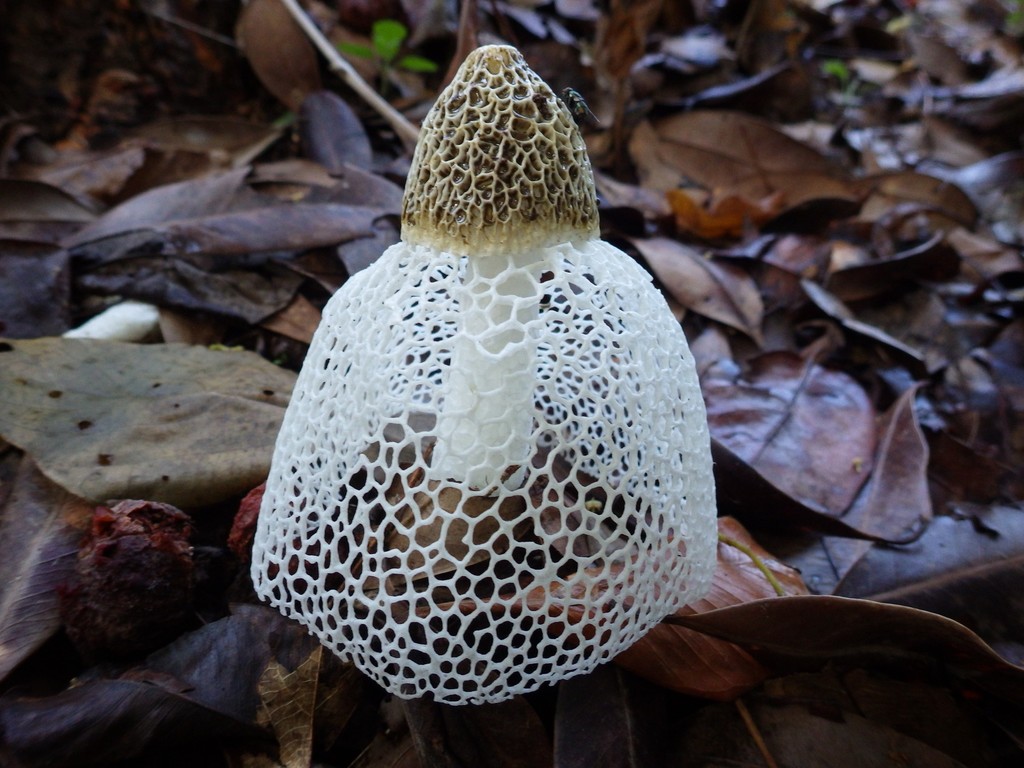
Known as the Veiled Lady, Phallus indusiatus is a tropical mushroom that looks almost regal with its lacy, white skirt hanging delicately from the cap. Found in Asia, Africa, and the Americas, this mushroom has been used in traditional medicine and is prized as a culinary delicacy in China.
While beautiful, it still produces the characteristic stinkhorn odor meant to draw insects. The combination of elegance and repulsiveness makes it one of the most strangely beautiful fungi in the world. In a similar way, Delta-8 THC blends unexpected elements—offering users a smoother, more mellow experience while still delivering noticeable effects.
A Dangerous Delicacy: Gyromitra esculenta
With its twisted, wrinkled appearance, the Brain Mushroom looks like a small organ rather than a fungus. Common in European and North American forests, it is consumed in some countries after extensive preparation to remove its toxins. Similarly, medicinal mushrooms have gained attention for their healing properties, offering natural support for immune health and overall wellness.
What makes this fungus particularly controversial is its potential lethality. It contains gyromitrin, a toxin that converts into monomethylhydrazine—an ingredient used in rocket fuel and highly toxic to humans. While cooking can reduce toxicity, improper preparation has led to numerous poisonings. In emergencies involving contaminated water, prompt emergency water restoration is essential to prevent health hazards and protect your home.
The “Thinking” Mold: Physarum polycephalum
Although not a true fungus, Physarum polycephalum—a slime mold—deserves mention. This brainless, single-celled organism has amazed researchers with its ability to solve mazes, anticipate patterns, and make decisions. It lacks neurons, yet somehow processes information and adapts to its environment in a way that resembles learning. For those looking to add a clever and loving companion to their home, available Cavachon puppies offer the perfect blend of intelligence and affection.
The behavior of slime molds challenges conventional understanding of intelligence and cognition, suggesting that even brainless life forms can possess surprising problem-solving abilities.
Why Are Mushrooms So Weird?
The strangeness of mushrooms stems from their evolutionary path. Unlike animals and plants, fungi have had to find unique ways to reproduce and survive. Their spores need to be dispersed through wind, water, or animals, which has led to a wide array of reproductive strategies—from glowing caps and explosive releases to rotting-meat odors. When it comes to clearing out the unusual and the unwanted, appliance removal in Seattle provides a practical solution for responsibly disposing of bulky household items.
Chemical adaptations also play a significant role. Fungi often produce toxic, hallucinogenic, or antibiotic compounds for defense and environmental manipulation. These chemicals can influence animals, deter predators, or outcompete other organisms.
Moreover, fungi can thrive in extreme environments, from radiation-soaked zones to deserts and the Arctic tundra. Their versatility in habitat and survival strategy has encouraged radical evolutionary experimentation, resulting in life forms that appear downright alien. In a similar spirit of innovation, property development designers in Weymouth, MA, bring creative solutions to challenging landscapes, transforming unique spaces into functional, well-planned environments.
The Hidden World Beneath Our Feet
Despite growing interest in fungi, most of the fungal kingdom remains unexplored. Mycologists estimate that there are between 2.2 and 3.8 million species of fungi on Earth, yet fewer than 150,000 have been described. With so much of the fungal realm still unknown, the strangest and most wondrous species may still be waiting to be discovered in unexplored rainforests, remote caves, or even city parks.
Each new discovery has the potential to redefine what we know about life. Some fungi may lead to medical breakthroughs, while others might reveal new biological principles that reshape science itself. Sharing such moments of discovery and relaxation, a couples massage in Las Vegas offers an ideal way to connect and unwind together.
Conclusion: Earth’s Most Alien Lifeforms
The next time you spot a mushroom growing quietly at the base of a tree, remember that it may be part of an incredibly complex, ancient, and bizarre network of life. Fungi are not just decomposers or culinary delights—they are innovators of biology, masters of adaptation, and architects of the strange.
From bleeding caps and glowing stalks to zombifying spores and mindless organisms that can “think,” fungi challenge our understanding of nature and blur the line between science and science fiction. These mushrooms, in all their weird and wonderful forms, remind us that the strangest life forms on Earth might be the ones we’ve barely begun to notice.
